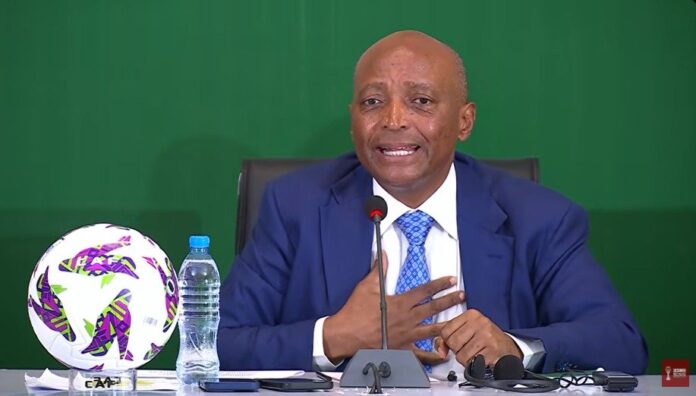

CAF president Patrice Motsepe has outlined plans to expand the Africa Cup of Nations to 28 teams, a move designed to broaden participation and raise the tournament’s competitive profile across the continent.
Motsepe made the announcement on Friday following a Confederation of African Football (CAF) Executive Committee meeting in Dar es Salaam, held alongside ongoing inspections of facilities in Kenya, Uganda and Tanzania, the co-hosts of the 2027 edition.
Under the proposal, AFCON would feature 28 participating nations and be staged every four years.
“The AFCON as we know it now is one of Africa’s most important sporting events,” Motsepe said.
“We want to increase it to 28 countries, and, as we have said, hold it every four years. This will allow more nations to compete at the highest level, showcase their talent, and contribute to the growth of African football.”
The CAF president explained that the expansion forms part of a wider strategy to modernise the game on the continent, strengthen competitiveness and enhance the tournament’s global appeal.
By opening the door to more teams, CAF aims to give emerging football nations a chance to compete alongside traditional heavyweights, while stimulating talent development and fan interest.
Motsepe added that a four-year cycle would provide national teams with greater preparation time, allowing them to build stronger squads and improve consistency — factors he believes will elevate the overall quality of the competition.
CAF is expected to consult its member associations and key stakeholders in the coming months to determine the tournament format, qualification process and logistical framework for the proposed expansion.
While the idea has been welcomed by many as a step towards inclusivity, concerns have been raised in some quarters about scheduling, travel demands and competitive balance.
If approved, the move to a 28-team tournament would represent a significant change in AFCON’s structure, reinforcing its status as Africa’s flagship football event and extending its reach to more nations than ever before.