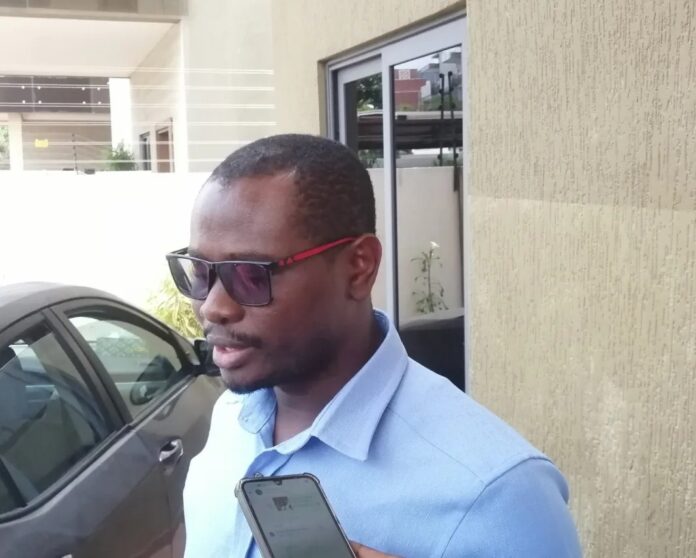

The Executive Director of the Centre for Extractives and Development Africa, Samuel Bekoe, has criticised Parliament for what he describes as a failure to properly exercise its oversight responsibility in the procurement of the Kpong power plant during Ghana’s power crisis.
Mr Bekoe said the circumstances surrounding the project, including allegations of payments made to facilitate its approval and selection, exposed weaknesses in the country’s procurement and governance systems.
Speaking in an interview on Accra-based Channel One TV, he said the use of emergency procurement procedures during the power crisis created room for critical checks and balances to be bypassed.
According to him, the severe power shortages at the time created a situation where normal governance processes were relaxed in the name of urgency.
“The key issue has exposed the fact that most times we base ourselves on an emergency to undertake certain procurement that is really sometimes dangerous.
“You ask about Parliament, which is supposed to be the gatekeeper, did not play a very good gatekeeping role. And the conviction in the US has exposed it about some of the payments made to facilitate approval and selection of the AKSA’s power plant, which is the Kpong power plant we have,” he said.
Mr Bekoe said the conviction of former Goldman Sachs banker and former Tema Oil Refinery (TOR) Managing Director Asante Kwaku Berko in the United States had brought renewed attention to allegations of payments linked to the approval and selection of the AKSA power plant, also known as the Kpong power plant.
He called on Parliament and other state institutions to strengthen their oversight mechanisms to ensure that emergency situations are not used to circumvent established procurement safeguards.
Mr Bekoe also questioned Ghana’s continued reliance on emergency procurement in the power sector, arguing that the country has enough data to anticipate future electricity demand and plan ahead.
“Should we always wait for an emergency? We definitely know the projections of our power sector. We know the growth of our power sector. Energy Commission does this job all the time. And we have all that particular data,” he said.
He said authorities often waited until the country was confronted with shortages in generation, distribution or equipment before resorting to urgent procurement arrangements.
“We almost always wait till we tell ourselves that, oh, we are not generating enough, we are not distributing enough, we don’t have enough transformers, and then we enter into some of these pressure deals,” he said.
According to him, such arrangements were often pursued under certificates of urgency, leaving little room for stakeholders to properly scrutinise the procurement process.
“We do not allow the process to play out. We do not allow stakeholders to review the process. We do not allow transparency into the process because we say we really need these power plants in an emergency,” he said.
Mr Bekoe’s comments come amid renewed scrutiny of the AKSA power agreement following the conviction of Mr Berko in the United States.
Former Power Minister Dr Kwabena Donkor has denied any involvement in the bribery allegations linked to the case.
Through his lawyers, Dr Donkor has denied requesting or receiving money from Mr Berko or authorising anyone to demand money on his behalf.
Meanwhile, the Economic and Organised Crime Office (EOCO) has commenced investigations into the Ghanaian dimension of the case, including efforts to trace funds and assets that may be linked to the alleged bribery scheme.
EOCO said the asset tracing and recovery exercise forms part of its investigation following Mr Berko’s conviction in the United States.
Also read: