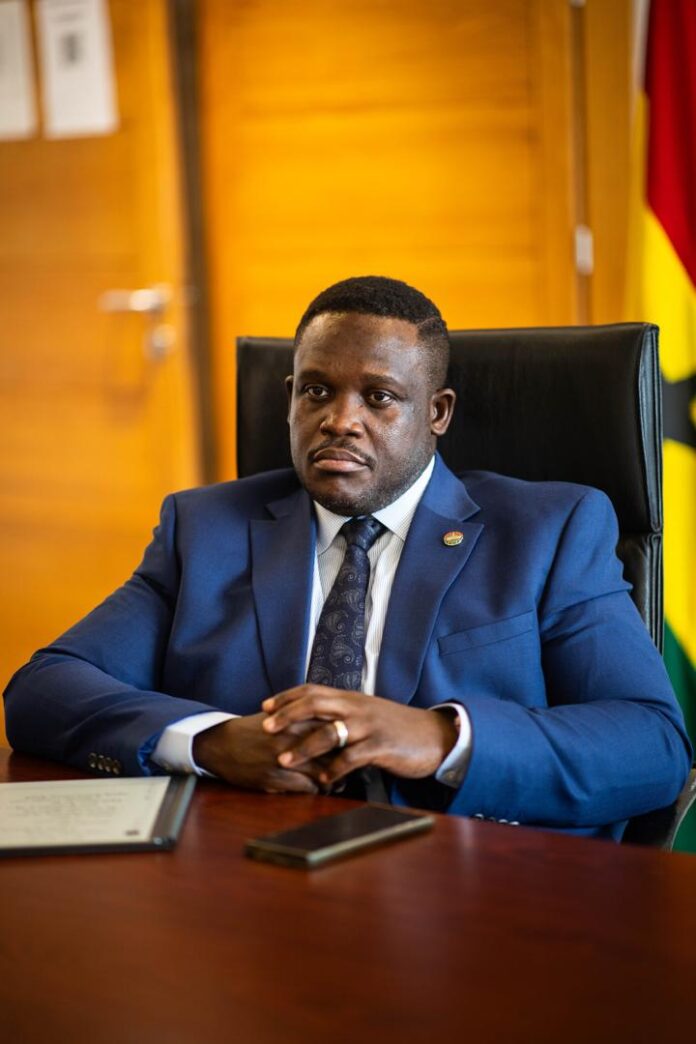

In the wake of a pre-dawn military operation by the United States in Venezuela, Minister of Communication, Digital Technology and Innovations, Samuel Nartey George, has raised concerns about the implications for global stability and the principle of territorial sovereignty.
His comments follow reports on January 3, 2026, that U.S. forces captured Venezuelan President Nicolás Maduro during a high-risk operation in the capital, Caracas.
The development has sent shockwaves across diplomatic circles, drawing comparisons to past Western military interventions in the Middle East and North Africa.
Reacting via his X (formerly Twitter) account, the Ningo-Prampram Member of Parliament referenced his academic background in peace and security studies to contextualise the unfolding events.
Mr. George, an alumnus of the Kofi Annan International Peacekeeping Training Centre (KAIPTC), described the operation as a real-time case study in international law, echoing the focus of his earlier research.
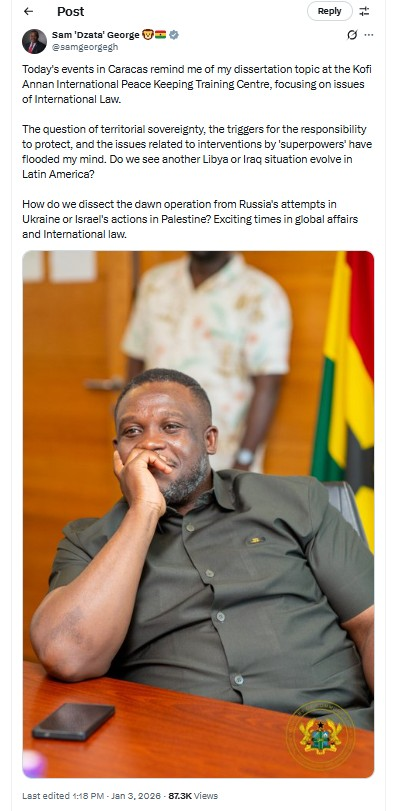
“Today’s events in Caracas remind me of my dissertation topic at the Kofi Annan International Peacekeeping Training Centre, which focused on issues of international law,” he wrote.
He noted that the operation raises complex questions about non-interference, stating that issues of territorial sovereignty, the thresholds for the responsibility to protect, and the role of so-called superpowers in foreign interventions had come sharply into focus.
The minister further questioned whether the world is witnessing a familiar pattern of regime-change interventions that have historically resulted in prolonged instability. He also raised concerns about perceived inconsistencies in how the international community responds to different conflicts.
“Do we see another Libya or Iraq situation unfolding in Latin America? How do we distinguish this dawn operation from Russia’s actions in Ukraine or Israel’s actions in Palestine?” he asked.
His remarks highlight ongoing debates about double standards in global governance, particularly in determining the line between democratic intervention and aggression against a sovereign state.
While supporters of the operation have hailed the capture of President Maduro as a win for democracy, critics and legal scholars, including Mr. George, view it as a critical test of the principles enshrined in the United Nations Charter.
He concluded his commentary by describing the moment as “exciting times in global affairs and international law,” suggesting that the precedents emerging from Caracas could shape the boundaries of superpower influence for decades to come.