

Several foreign governments are pressing Ghana to reconsider a proposed overhaul of its mining royalty regime, according to a report by Reuters.
The report indicates that the governments of Canada, Australia, China, South Africa and the United States have raised concerns about a new royalty sliding scale currently before Parliament.
The proposed measure, laid before Parliament on December 19, 2025, seeks to replace Ghana’s current de facto 5% royalty rate on gold with a sliding scale ranging from about 5% to 12%.

Under the proposed framework, royalty rates would rise as commodity prices increase.
With global gold prices currently trading above $5,000 per ounce, the immediate implication is that large scale gold miners operating in Ghana could move directly into the 12% royalty bracket once the Legislative Instrument matures on Monday, March 6.
The proposed change represents one of the most significant adjustments to Ghana’s mining fiscal regime in recent years.
For more than a decade, gold mining companies have effectively paid 5% royalties on revenue, alongside a 35% corporate income tax, the 3% Growth and Sustainability Levy, and several other statutory payments including withholding taxes, mineral rights fees and surface rent.
When these are combined, Ghana’s overall government take from mining companies is around 48% to 50%.
Industry modelling suggests the proposed sliding scale could push the effective tax rate for mining companies to between 60% and 68%, placing Ghana among the highest taxed mining jurisdictions globally.
Such a shift has raised concerns among investors and industry groups about the long term competitiveness of the country’s mining sector.
Against this backdrop, the diplomatic intervention reported by Reuters is perhaps unsurprising.
Many of the world’s largest gold mining firms operate in Ghana, and several are headquartered in or heavily financed through the countries now raising concerns.
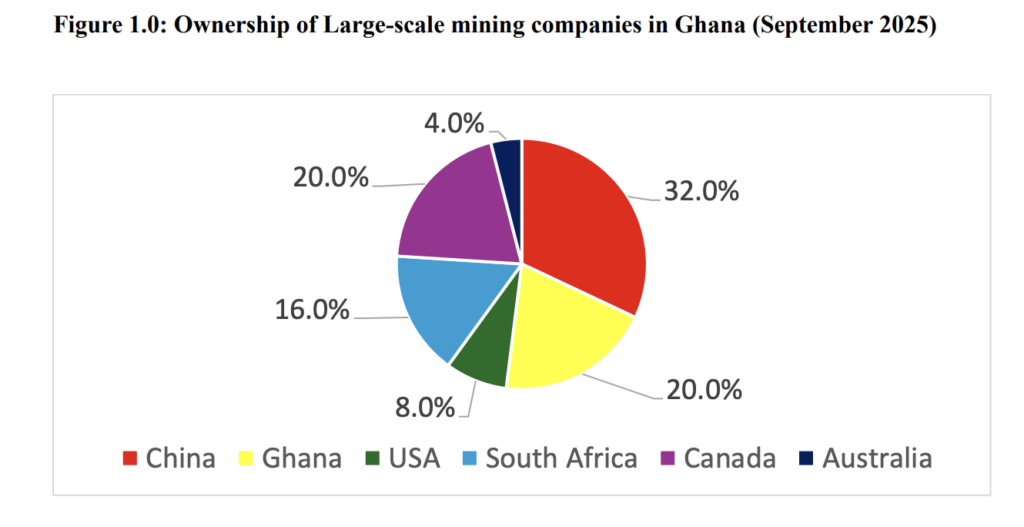
These governments typically advocate for stable and predictable fiscal regimes for companies operating abroad. Sudden or sharp changes to royalty structures can alter project economics, particularly in capital intensive industries such as mining.
Yet, the core issue raised by analysts is not necessarily the idea of a sliding scale itself.
Many resource rich countries adopt price linked royalty systems to capture a larger share of commodity windfalls when global prices rise.
The key question is how the proposed rates were determined.
So far, despite repeated requests, Ghana’s Lands Ministry has not confirmed whether any such analysis was conducted, nor has it publicly released the fiscal modelling or economic analysis underpinning the proposed 5 to 12% royalty range.

This lack of transparency has left investors, analysts and industry players attempting to model the potential impact independently.
In a previous analysis examining the proposed sliding scale, I explored how such a structure could affect both mining company profitability and Ghana’s long term revenue base.
Publishing the government’s underlying assumptions and modelling would help clarify whether the policy strengthens Ghana’s fiscal position over time or risks unintended consequences.
Ghana is the largest gold producer in Africa, and the mining sector remains one of the country’s most important sources of export earnings, tax revenue and foreign exchange.
The government therefore faces a familiar policy dilemma confronting many resource rich economies.
On one hand, rising gold prices will allow for the state to capture a larger share of windfall profits.
On the other, fiscal regimes that become excessively burdensome can deter investment, shorten mine lifespans and ultimately reduce long term government revenue.
Transparent modelling and clear communication of policy assumptions can help bridge that gap.
Until those numbers are made public, however, uncertainty around the proposed sliding scale is likely to persist both within the industry and among Ghana’s international partners.