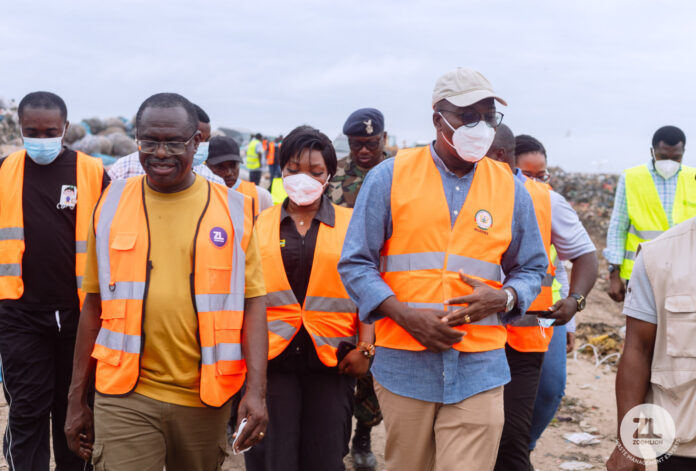

The government has initiated preparations for a large-scale operation to remove accumulated waste from Jamestown in Accra and transport it to the Adipa Waste Management Centre, an engineered landfill facility located at Nsawam in the Eastern Region.
Minister for Local Government, Chieftaincy and Religious Affairs, Hon. Mahama Ayariga, disclosed the plan following a working visit to the facility on Wednesday, September 2, 2026.

The visit was intended to evaluate the site’s capacity to handle the waste stockpiled in Jamestown.
This latest inspection came after the Minister’s Tuesday tour of critical waste management facilities in the Greater Accra Region, which included the Jamestown and Achimota Waste Transfer Stations, the Accra Compost and Recycling Plant (ACARP), and the Kpone landfill site.
These visits are part of the Ministry’s broader effort to evaluate the nation’s waste management infrastructure and identify urgent solutions to the capital’s mounting sanitation issues.
Following his review of the situation at Jamestown, Hon. Ayariga stated that he had consulted with the Ministers for Roads and Highways, Finance, and Defence to formulate an emergency evacuation strategy.
“The four of us have developed a plan to clear all the waste from Jamestown. The primary question is, where do you send it once it’s collected?”
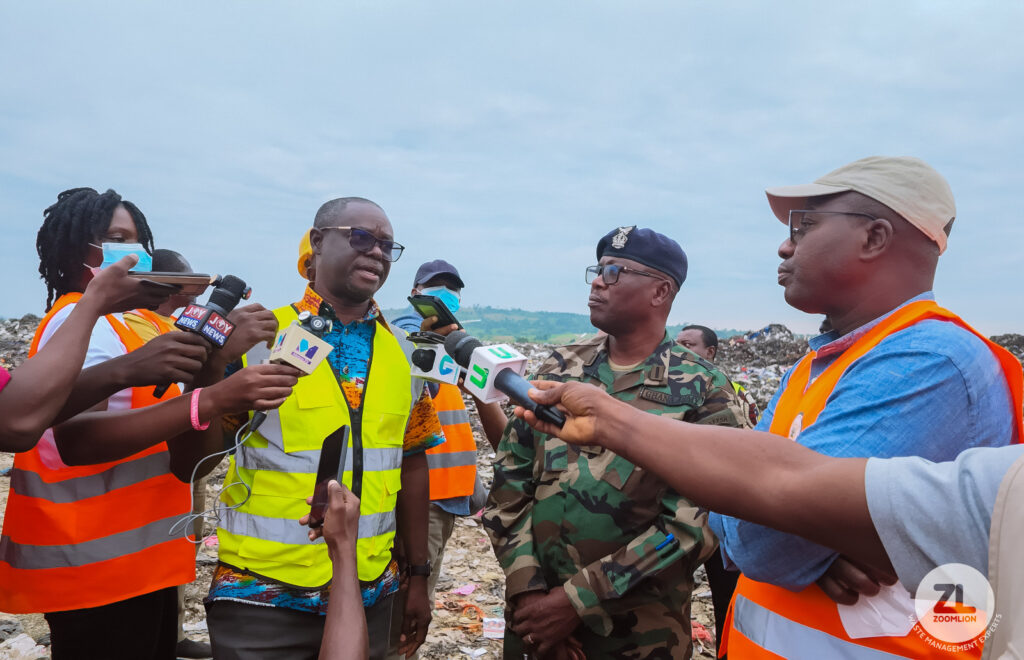
The Minister noted that the government subsequently engaged Dr. Joseph Siaw Agyepong, Executive Chairman of the Jospong Group of Companies, who confirmed that the Adipa landfill, operated by a subsidiary of the Group, was available to accept the waste.
“We contacted Dr. Siaw Agyepong and discussed it with him, and he indicated that the Adipa landfill site is ready. So, if we can organize the trucks and equipment, we can transport all the waste from Jamestown to this location.”
Technical assessment to determine logistics
Hon. Ayariga explained that the government would first perform a technical assessment to calculate the volume of waste at Jamestown, the travel distance to the Adipa site, and the number of trucks necessary for the evacuation.
He mentioned that the Director of Highways and his technical team would participate in this assessment to determine the number of trips, fuel requirements, and other logistical needs.
“Once you calculate the volume of waste, you know how many trucks you need. And if you calculate the distance and time, you also know how many trips it will take to clear the waste.”
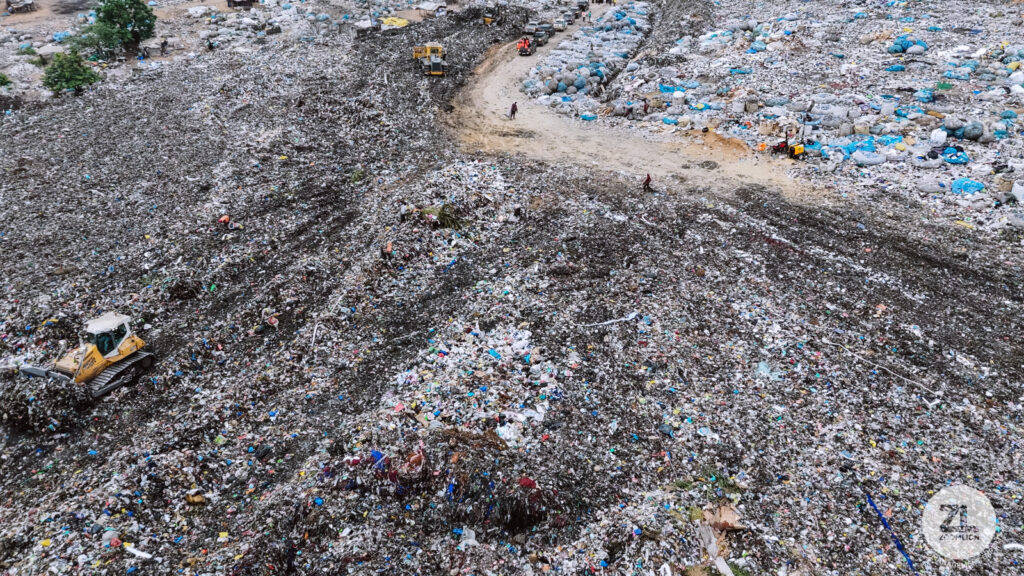
The Ministry of Roads and Highways is expected to provide logistical support for the exercise, while the government is also in talks with major construction firms in the Greater Accra and Eastern Regions to supply trucks and heavy-duty machinery.
Hon. Ayariga said several contractors have already shown a willingness to support the effort voluntarily.
“We are engaging them and they have all expressed a readiness to help. In some cases, they have even offered their trucks and equipment for free to assist the government in removing the waste.”
He added that the technical assessment would help the government determine the exact number of trucks to mobilize and the timeline for completing the evacuation.
Military to secure cleared area
The government also plans to deploy the military to secure the cleared areas at Jamestown once the waste has been removed.
Hon. Ayariga stated that the military would prevent renewed dumping, littering, and encroachment by squatters after the operation.
“After we’ve moved out of the Jamestown area, the military will take responsibility for protecting that area to ensure we don’t bring waste back. They will also prevent squatters from occupying the cleared land and creating a mess again.”
He stressed that this security measure is crucial to safeguard the government’s investment and prevent the area from reverting to its current state.
The Minister also disclosed that the Finance Ministry has plans for the redevelopment of the area once the waste is cleared.

Selected roads may be closed
Hon. Ayariga noted that the government is considering temporary road closures during the evacuation to prevent traffic congestion from delaying the waste trucks.
He suggested the operation could be conducted over select weekends, with specific routes closed to regular traffic to allow the trucks to move efficiently.
“We may choose a certain Saturday and Sunday and declare that on those days, we will be evacuating waste, so this route is closed to all other vehicular movement.”
He said the waste trucks would operate under police protection to ensure the exercise is completed in the shortest possible time.
“Only the trucks that are offloading will be on the road, protected by the police, so that we can have a speedy evacuation and finish within a short period.”

Adipa landfill ready to receive waste
The Operations Manager of the Waste Landfill Company Ltd, Richard Omane Mensah, confirmed that the Adipa facility has enough capacity to take in additional waste from Accra.
He said the landfill can receive over 3,000 tonnes of waste daily and operates around the clock to maximize its capacity.
“This site has the capacity to receive over 3,000 tons a day. And I’m happy to let you know that we operate 24 hours a day.”
Mr Mensah said the facility currently handles between 1,500 and 1,600 tonnes of waste daily, with about 800 to 900 tonnes arriving at night and 700 to 800 tonnes during the day.
“We are receiving over 800 to 900 tons at night alone, and in the daytime about 700 to 800 tons.”
He confirmed that the facility is fully prepared to accept waste from Jamestown.
“We are ready to receive all the waste that will be evacuated to this over 200-acre land. ”
Mr. Mensah explained that the landfill is developed in cells, with new ones added gradually as demand increases.
He noted that its location away from the densely built Accra metropolis provides ample space for long-term waste management.
“Because Accra is developed, there is no way you can get a big land like this here. So we have to move away from the community; we can’t have a landfill in a very developed area.”
According to him, the facility could serve the area’s waste management needs for between 35 and 50 years, depending on the volume of waste received.
However, Mr. Mensah pointed out that the condition of some access roads could pose a challenge to the evacuation, warning that poor road conditions might slow down the waste trucks.
“At a certain point, we have to slow down because the road is not secure. That will delay the trucks, and given the volume of work involved…”
The government is expected to finalize the evacuation plan after the technical assessment, which will determine the volume of waste, number of trucks, routes, fuel needs, and overall duration of the operation.