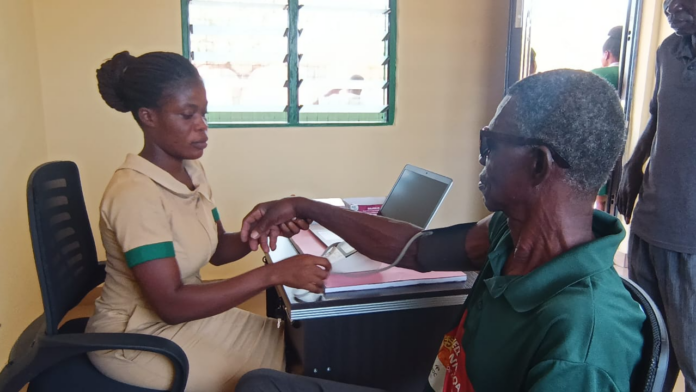

Health workers’ refusal to accept postings to Krachi West Municipality in the Oti Region is increasingly undermining healthcare delivery, according to the Municipal Health Director, Victor Ahiaba.
Speaking to Adom News, Victor Ahiaba said the municipality continues to struggle with inadequate permanent staff, a situation he believes is slowing progress toward accessible, quality primary healthcare.
He acknowledged the ongoing support of the Member of Parliament for the area, Helen Adwoa Ntoso, and contributions from partner organizations, but stressed that these interventions cannot fully compensate for the shortage of health professionals willing to work in the municipality.

Victor Ahiaba explained that although the directorate has made postings to the area over the years, only a small number of health workers actually report for duty.
He attributed the low reporting rate largely to difficult terrain and transportation challenges, particularly in reaching island communities.
He noted that fear of travelling on the lake has also discouraged some staff from taking up their assignments.
As a result, several facilities are operating below standard.
The Health Director disclosed that four CHPS compounds in some communities currently have no healthcare personnel, leaving residents with limited or no access to basic services such as maternal care, child welfare clinics, and prompt treatment for common illnesses.
He argued that the situation requires stronger national-level intervention, including the posting of adequate numbers of health workers to the municipality and ensuring the necessary support systems to help them work effectively.
According to him, achieving universal primary healthcare in Krachi West will remain difficult unless staffing gaps are addressed as a priority.
On the disease burden in the municipality, Victor Ahiaba identified malaria as the most common condition presented at primary healthcare facilities.
He said the health directorate continues to distribute mosquito nets and implement preventive measures, particularly for children under five, but cases remain high.
He also raised alarm about increasing rates of anaemia among pregnant women, describing it as a major seasonal challenge driven by household food shortages and limited access to nutritious staples during certain periods of the year.
The Health Director urged residents to remain committed to prevention efforts.
He advised households to consistently sleep under mosquito nets and maintain good hygiene practices, noting that the municipality is also seeing a rise in non-communicable diseases that can be reduced through healthier living and improved sanitation.
Collaboration is key to taking Ghanaian films global – BSIFF Ambassador…