

A research scientist at the Soil Research Institute of the Council for Scientific and Industrial Research (CSIR-SRI) has urged the government to adopt a community-driven approach to tackling illegal mining in Ghana, arguing that top-down enforcement strategies have consistently failed to address the root causes of the problem.
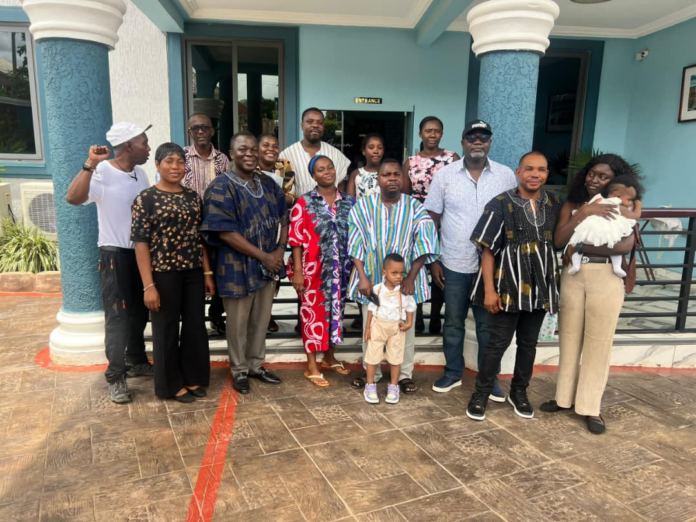
Dr. Albert Kobina Mensah made the call during the launch of his latest book, Soil Pollution and Remediation: Risk Assessment, Phytoremediation, Revegetation, held at Kromuase in the Ashanti Region.
The book examines the interrelated issues of soil pollution, potentially toxic elements, risk assessment, phytoremediation, revegetation, and post-mining land rehabilitation.
Its central aim is to provide an in-depth analysis of scientific methodologies used to identify environmental risks at mining sites and to explore revegetation as a strategy for restoring degraded and contaminated lands.
Dr. Mensah highlighted the book’s focus, noting that while it broadly addresses environmental pollution, it carries a deliberate emphasis on mining, as it forms an integral part of the country’s environmental challenges.
“When it comes to mining, no matter the scale—whether small scale, large scale, peasant, artisanal, medium, illegal, or legal—every form of mining causes pollution,” he said. “Environmental problems in Ghana cannot be discussed without galamsey.”
Dr. Mensah was particularly critical of the government’s current approach to combating galamsey, arguing that deploying task forces from Accra without involving affected communities is ineffective.
“All these measures will not stop galamsey because they do not address the root cause. The root cause of the problem, be it institutional, economic, or social, must be addressed,” he said.
He called on government to revise institutional frameworks around mining regulation and promote self-regulation at the community level, empowering local residents to oversee mining activities in their own areas rather than relying solely on centralised enforcement.
“It must be inclusive. It must be participatory enough so that the very people affected by mining will be involved in the decision-making,” he added.
Beyond the policy debate, Dr. Mensah also urged scientists across the continent to publish more research findings.
“I think we are not writing enough; we have more to write. We have success stories that should be shared with the world. There are challenges that should also be documented,” he said.
He acknowledged limited research funding but encouraged innovation and resilience among researchers.
“The resources are not there, but we can improvise,” he added.
Dr. Mensah, who is also a lecturer at UMAT and the CSIR College of Science and Technology, has authored several books, including Environmental Safety: Techniques for Identifying Soil Human Health Risks in Mine-Site Reclamation, Scholar’s Journey, and I Speak of a Better Society.
His latest work further reinforces his commitment to advancing environmental management and land restoration in mining-affected communities.
TAGG heads to court over Publican AI system, threatens nationwide shutdown
