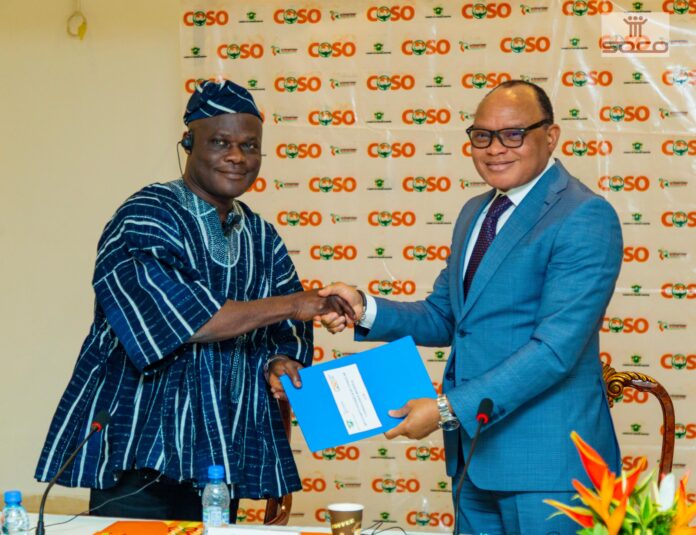

Ghana has assumed the presidency of the Committee for Regional Coordination (CRC) under the Social Cohesion Project for the Northern Regions of the Gulf of Guinea (SOCO), with the Minister for Local Government, Chieftaincy and Religious Affairs, Ahmed Ibrahim, pledging strong and purposeful leadership to advance a more coordinated regional response to insecurity, climate change and economic vulnerability.
The transition, in line with the CRC’s rotating leadership arrangement, places Ghana at the forefront of strengthening collaboration among Benin, Côte d’Ivoire and Togo to support stability and resilience in border communities.
Mr. Ibrahim delivered this message during the CRC meeting held ahead of the SOCO Regional Conference in Côte d’Ivoire, where member states convened to review progress and align priorities under the project.
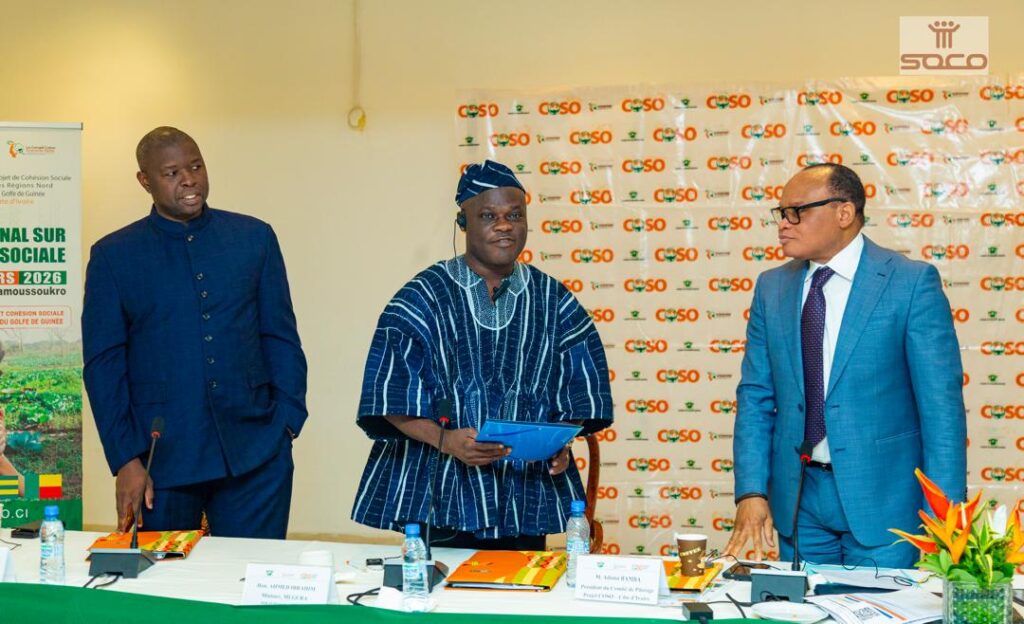
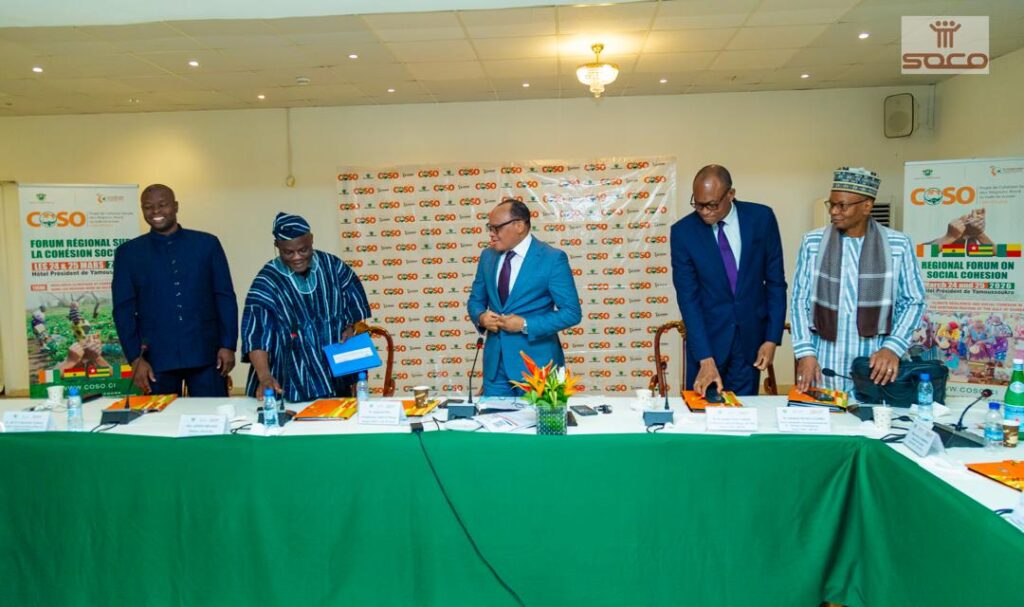
The CRC meeting, which serves as the project’s central coordination platform, brought together representatives of the four countries to assess implementation of the 2025–2026 roadmap, share country experiences and discuss measures to strengthen the regional dimension of the project.
In his address, the Minister underscored the urgency of collective action, noting that the challenges confronting the region are shared and deeply interconnected. Across the northern corridor of the Gulf of Guinea, communities continue to face mounting pressures from climate variability, limited economic opportunities and the spillover effects of insecurity from the Sahel. These challenges are particularly evident in border areas where livelihoods depend on agriculture, trade and cross-border movement.
He explained that when opportunities are limited and access to essential services is constrained, communities become more vulnerable, making social cohesion a critical foundation for peace and stability. Recent incidents affecting cross-border traders, he noted, illustrate how insecurity in one country can quickly affect neighbouring states, disrupting livelihoods and threatening regional progress.
“Our collective safety depends on how well we work together. No country can address these challenges alone,” he stated.
As the new CRC President, Mr. Ibrahim said Ghana assumes this responsibility with a clear sense of duty, resolve and regional commitment. He acknowledged the weight of expectations that come with the role but affirmed that Ghana is prepared to lead with purpose, coordination and accountability, ensuring that the CRC delivers practical results that strengthen cooperation and advance the collective goals of all member countries.
Under Ghana’s leadership, the CRC will drive implementation of the 2025–2026 roadmap, with a focus on strengthening coordination, enhancing knowledge sharing and improving joint responses to fragility, conflict and climate-related risks. The country will also deepen the work of the Regional Coordination and Dialogue Platform to promote continuous engagement and collaboration across countries and partners.
Drawing on Ghana’s experience, the Minister highlighted that since the inception of the SOCO project, about 1.5 million people across 48 districts in six northern regions have benefited from investments in schools, health facilities, water systems, sanitation services and local markets, with nearly 950 infrastructure subprojects completed as of January 2026.
He also noted that more than 46,000 beneficiaries—largely women and young people—have received support through local economic initiatives in farming, agro-processing and other income-generating activities, helping to reduce vulnerability, strengthen local economies and promote stability within communities.
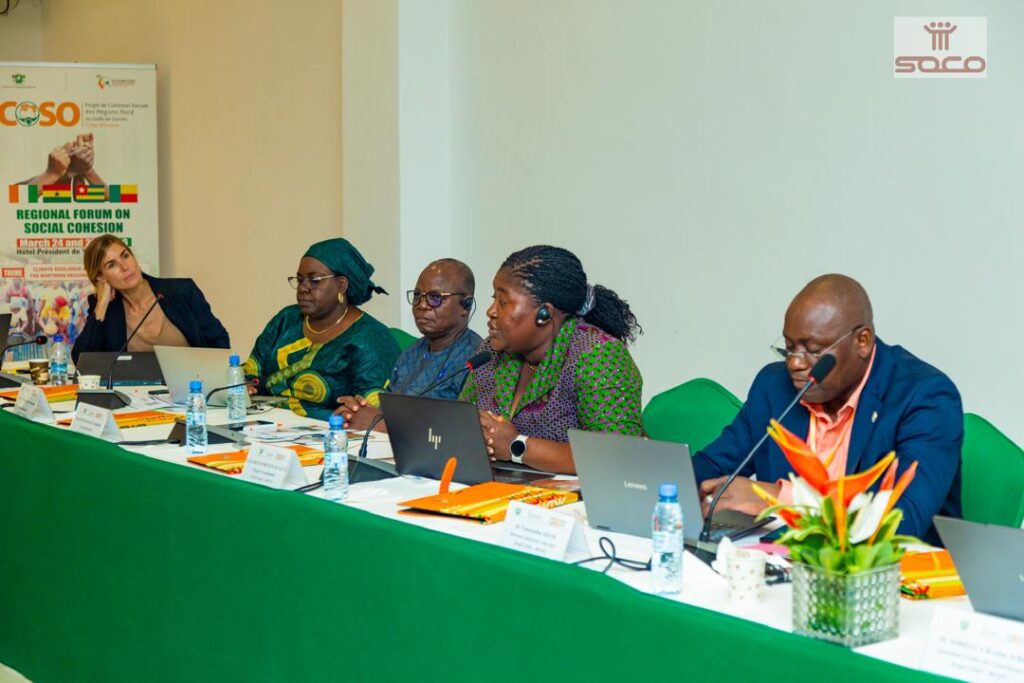
Ghana’s assumption of the CRC presidency comes as the country joins its partners at the SOCO Regional Conference in Côte d’Ivoire, where discussions are focused on climate resilience and its link to social cohesion across the subregion.
The Minister called for sustained collaboration among member states, development partners and the private sector to consolidate gains and expand impact.
“Our shared responsibility is to ensure that our border communities become places of opportunity and stability, not vulnerability,” he concluded.
Ghana’s leadership of the CRC is expected to strengthen regional solidarity and accelerate efforts toward building resilient and peaceful communities across the Gulf of Guinea.
ALSO READ: