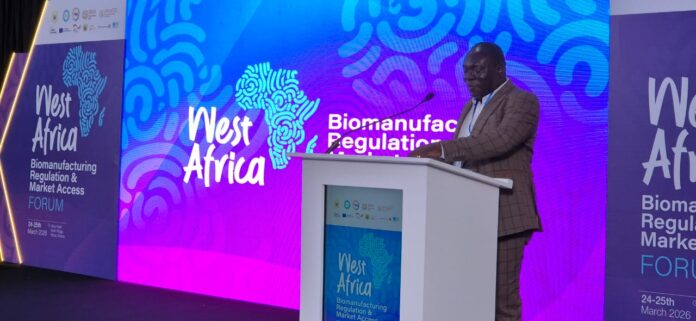

West African countries are deepening the use of regional regulatory frameworks to fast-track biomanufacturing and reduce dependence on imported vaccines.
This was a key focus at the West Africa Bio-manufacturing Regulation and Market Access Conference held in Accra, where industry players underscored the need to align policies to unlock local vaccine production, biologics development, and broader biotech innovation.
Director-General of the African Medicines Agency, H.E. Dr. Delese Darko, said the region is not starting from scratch but building on existing harmonisation systems in medicines regulation, agriculture, and biosafety.
She noted that West Africa’s track record in aligning drug and vaccine approvals provides a strong foundation to extend similar frameworks into biomanufacturing, ensuring that products manufactured in one country can gain seamless regulatory acceptance across the sub-region.
Dr. Darko further stressed that regional integration is critical to achieving Africa’s goal of producing 60% of its vaccines locally by 2040, warning that the continent’s continued reliance on importing about 99% of its vaccines poses serious public health and supply chain risks.
Regional architecture driving the shift
Experts at the forum outlined a “regional-first, national-implementation” model anchored on strong institutional coordination. Under this approach, the Economic Community of West African States (ECOWAS) provides policy direction, while the West African Health Organization (WAHO) leads technical coordination and regulatory alignment.
They pointed to the West Africa Medicines Regulatory Harmonisation (WA-MRH) initiative, which has established a centralised system for medicine and vaccine approvals across 15 countries, as a proven template for scaling biomanufacturing regulation.
Harmonisation efforts are also extending into key technical areas, including Good Manufacturing Practice (GMP), clinical trial oversight, pharmacovigilance systems, and biosafety standards. In the biomanufacturing space, this covers advanced areas such as cell and gene therapies, bioprocess validation, and laboratory quality assurance frameworks.
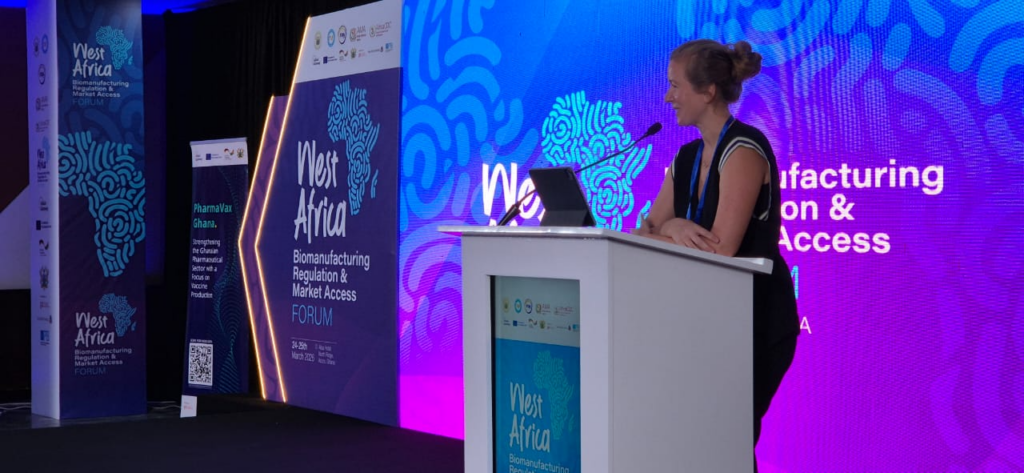
Stakeholders also emphasised the importance of joint regulatory assessment mechanisms that allow multiple countries to rely on a single scientific evaluation, helping to reduce duplication and speed up market authorisation for vaccines and biologics across borders.
In addition, ECOWAS policy frameworks are being aligned to support research and development, technology transfer, and intellectual property protection—key drivers for building sustainable local manufacturing systems. Regulatory systems are also being expanded to accommodate emerging technologies, including plant-based biotech and genetically engineered products.
These regional efforts are expected to complement continental initiatives such as the African Medicines Regulatory Harmonisation (AMRH) programme and the African Medicines Agency (AMA), with the long-term goal of establishing a unified African regulatory ecosystem.

Persistent bottlenecks
Despite these advances, challenges remain. CEO of the National Vaccine Institute, Dr. Sodzi Sodzi-Tettey, cited fragmented legal regimes, language barriers, infrastructure deficits, and the slow domestication of regional protocols as major constraints to scaling up.
Director of Pharmaceutical Services at the Ministry of Health, Saviour Yevutse, also called for stronger political commitment to achieve the 2040 vaccine production target. He warned that Africa’s heavy reliance on imports continues to expose the continent to supply shocks and health security risks.
He stressed the need to move beyond policy statements to actionable frameworks, particularly in pooled procurement and market access, ensuring that vaccines produced within the region can circulate freely without regulatory bottlenecks.
“The region must transition from communiqués to implementation. A vaccine produced in Nigeria should be readily accepted in Ghana, just as a biopharmaceutical from Senegal should reach Liberia without unnecessary delays,” he said.
Participants at the forum called for stronger political will, capacity building, and integrated procurement systems to position West Africa’s biomanufacturing sector as competitive within the global pharmaceutical value chain.
READ ALSO:
Assemblies of God Ghana backs Mahama over honorary doctorate withdrawal
ICS boss attacked in Bolgatanga during anti-dog and cat meat campaign