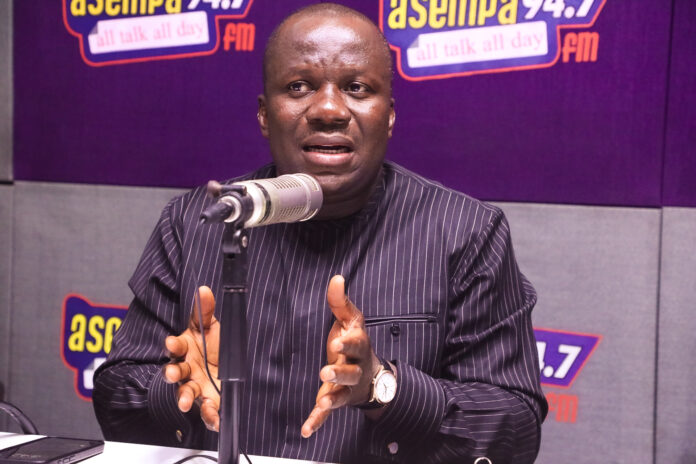

Member of Parliament for Damongo, Samuel Abu Jinapor, has expressed concern over Ghana’s recent decline in the Global Mining Investment Attractiveness Index, warning that the development could weaken the country’s competitiveness and its ability to attract long-term mining investment.
In an opinion commentary, the former Minister for Lands and Natural Resources said Ghana dropped seven places in the latest ranking, moving from 46th position in 2024 to 53rd in 2025.
The ranking, compiled by the Fraser Institute, assessed 68 countries in 2025, compared with 82 jurisdictions in the previous year.
Mr. Jinapor described the decline as troubling for a sector that has long played a central role in Ghana’s economy through export earnings, foreign exchange inflows, employment and fiscal revenues.
According to the report, which ranks mining jurisdictions based on how public policies encourage or discourage investment, Ghana also slipped on the Policy Perception Index. The country placed 50th out of 68 jurisdictions in 2025, compared with 46th out of 82 in 2024.
The Damongo MP noted that Ghana now ranks behind several African countries including Côte d’Ivoire, Democratic Republic of the Congo, Namibia, Zambia, Tanzania, Morocco and Botswana.
He attributed the drop largely to investor concerns about regulatory uncertainty, fiscal policy changes and perceptions of policy inconsistency within the mining sector.
Mr. Jinapor argued that the sector had made notable progress during the administration of former President Nana Addo Dankwa Akufo-Addo, citing record gold production and several large-scale mining investments.
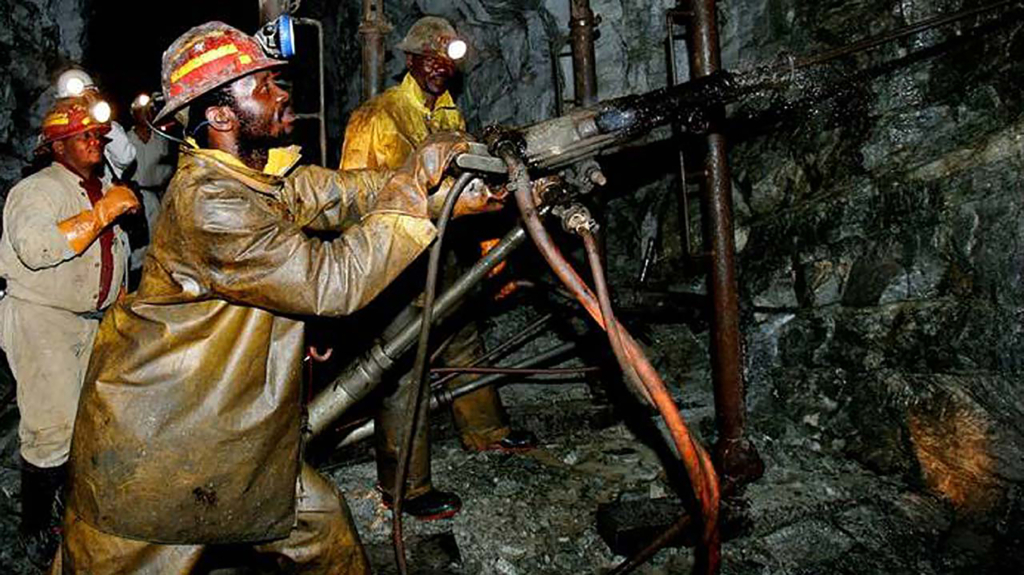
He said Ghana overtook South Africa to become Africa’s leading gold producer, with production reaching about 4.9 million ounces in 2024 and generating more than $10 billion in export revenue.
Among other developments he listed were the introduction of the Domestic Gold Purchase Programme, expansion of existing mines and the construction of new mining projects, including the Cardinal Namdini mine, which poured its first gold in October 2024.
Mr. Jinapor, who served as Lands and Natural Resources Minister between 2021 and 2024, said Ghana’s improved investment outlook during that period was reflected in the country’s increase in investment attractiveness score from 44.35 points in 2023 to 56.98 points in 2024.
However, he said the latest ranking suggests a shift in investor perceptions, pointing to issues highlighted in the report such as uncertainty in the administration of regulations, regulatory duplication, taxation concerns, trade barriers and weaknesses in the legal framework.
He also referred to recent fiscal measures in the mining sector, including the introduction of a sliding royalty regime, which he said may have contributed to uncertainty among investors.
Earlier this year, the Ghana Chamber of Mines warned that some fiscal policies risk constraining investment expansion and may not deliver sustainable revenue in the long term.
Mr. Jinapor further cited controversies surrounding state involvement in some mining operations and what he described as signals of possible resource nationalisation, which he said have raised concerns within the international investment community.
He also pointed to Ghana’s low score on mineral potential in the report, which he attributed to limited geological investigations.
Mining investment, he noted, is influenced by factors such as geological potential, fiscal stability, regulatory certainty and the credibility of state institutions.
Mr. Jinapor warned that the decline could undermine efforts to strengthen the country’s gold reserves under initiatives such as the Domestic Gold Purchase Programme, originally promoted by former Vice-President Mahamudu Bawumia.
To restore investor confidence, he called for a review of the country’s mining policies, including simplification of the fiscal regime, increased investment in exploration and stronger action against illegal mining.
He also urged government to strengthen the capacity of the Ghana Geological Survey Authority to undertake geological investigations and support partnerships for exploration.
According to him, addressing illegal mining remains critical, as the activity continues to affect concessions held by licensed mining companies and increases operational risks.
Mr. Jinapor added that Ghana should pursue a broader strategy to integrate the mining sector with downstream industries, including refining and value addition, to support long-term economic development.
He said maintaining consistent, transparent and investor-friendly policies would be key to restoring Ghana’s standing as a leading mining destination in Africa.