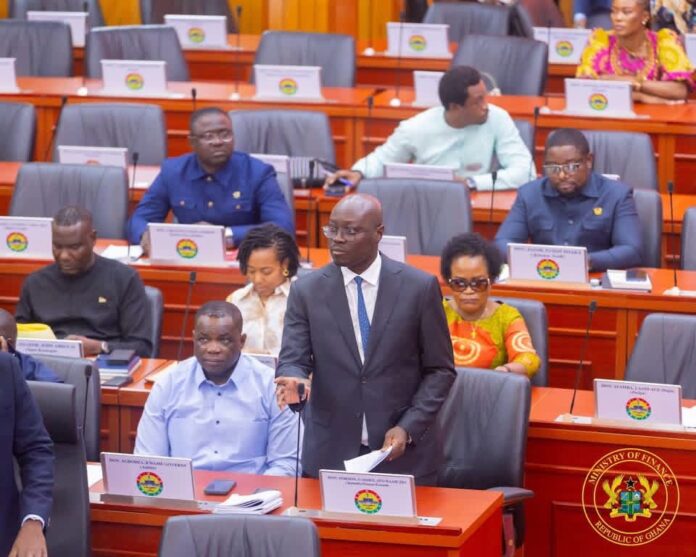

The Minister for Finance, Cassiel Ato Forson, has laid the Value for Money Office Bill before Parliament, describing it as a decisive step to address long-standing inefficiencies in Ghana’s public financial management system.
Presenting the Bill on the floor of the House, Dr. Forson said the proposed legislation seeks to tackle persistent challenges such as inflated contracts, abandoned projects, cost overruns and wasteful public expenditure.
According to him, the Bill aims to institutionalise a comprehensive value-for-money framework to ensure that every cedi spent by government delivers maximum benefit to citizens in terms of economy, efficiency, effectiveness, equity and sustainability.
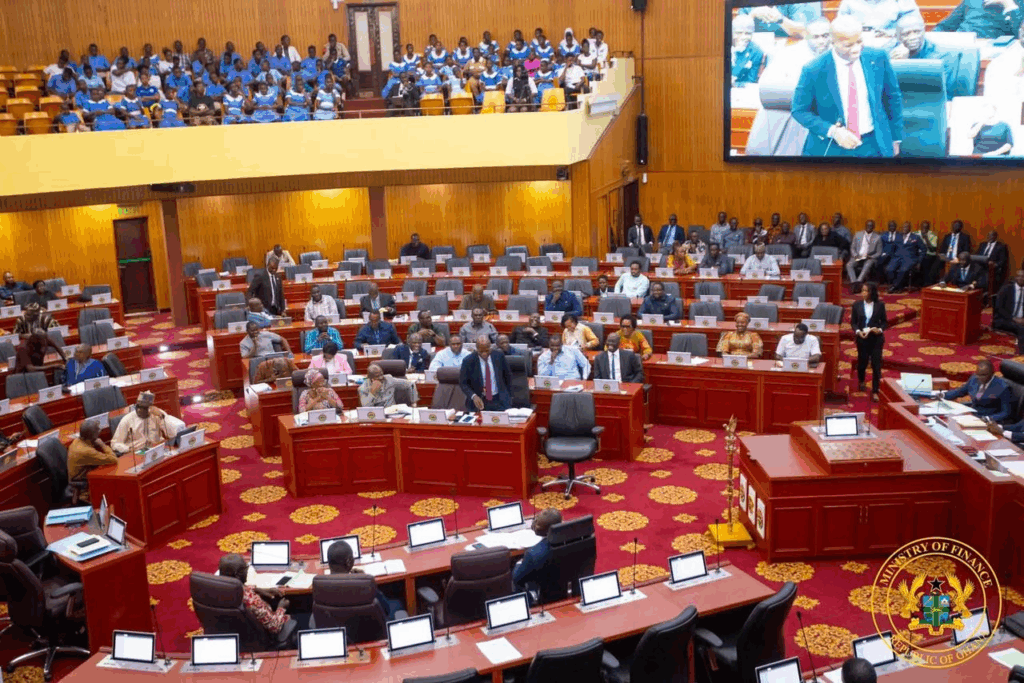
He explained that the proposed Value for Money Office will operate as a specialised and independent oversight body with a clearly defined technical mandate.
The Office will conduct value-for-money assessments, issue mandatory Value for Money Certificates before the award of major contracts, monitor compliance and enforce sanctions where violations occur.
Dr. Forson emphasised that the overarching objective of the Bill is to strengthen fiscal discipline, minimise waste, boost public confidence and reinforce the country’s governance and accountability framework.
He further noted that the legislation is expected to curb contract inflation, promote uniform pricing across government entities and transform Ghana’s public financial management landscape. By strengthening oversight and enforcing compliance, the Office is projected to generate measurable cost savings, improve the quality of public sector projects and ensure more equitable distribution of resources.
The Minister indicated that the Bill aligns Ghana with established international best practices in public expenditure management. He cited institutions such as the National Audit Office and the Government Accountability Office, as well as value-for-money frameworks in Canada and other advanced jurisdictions, as examples of systems that have enhanced accountability and optimised the use of public funds.
He concluded that the establishment of the Value for Money Office will not only strengthen public trust and investor confidence but also ensure that public investments deliver tangible social and economic returns for the Ghanaian people.