
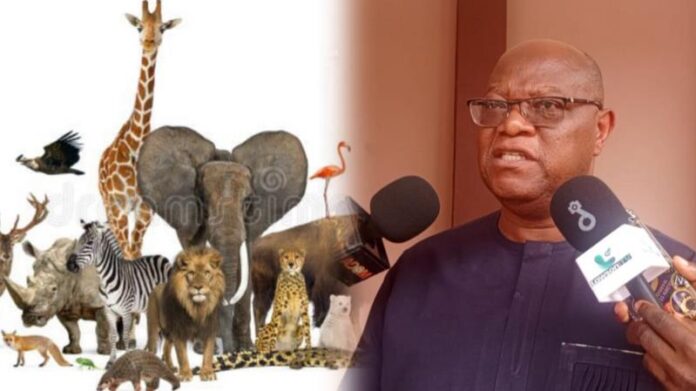

Ghana’s government is set to reduce its reliance on revenue from exporting raw timber and wildlife, instead focusing on promoting ecotourism as a sustainable source of income while preserving the country’s rich natural heritage.
Joseph Osiakwan, Technical Director of Forestry at the Ministry of Lands and Natural Resources, revealed the plans during a stakeholder consultation on the draft Legislative Instrument (LI) for implementing the Wildlife Resources Management Act, 2023 (Act 1115). The consultation was held in Kumasi as part of a nationwide exercise to gather public input on operationalising the Act.
The event brought together representatives from the private sector, civil society organisations, and officials from the Forestry Commission and its Wildlife Division.
Speaking at the consultation, Osiakwan emphasized the ecological, economic, and cultural value of wildlife resources, noting that they drive tourism, support livelihoods, maintain biodiversity, and enhance climate resilience.
He also raised concerns about growing threats such as habitat loss, illegal hunting, encroachment, pollution, and climate change.
He stated, “Many African countries, like Kenya, Ethiopia, and Namibia, generate significant revenue from ecotourism. Ghana can adopt similar strategies to conserve its wildlife and forests, attract tourists, and boost government revenue.”
Osiakwan described the passage of the Wildlife Resources Management Act as a milestone in the country’s environmental governance and said the consultation was crucial to strengthen Ghana’s wildlife management framework. “For the law to be effectively implemented, we require clear and practical regulations. That is why we are gathered here today to deliberate on the draft Legislative Instrument,” he explained.
The regional consultation approach was designed to ensure communities, traditional authorities, district assemblies, private sector actors, and civil society groups directly affected by wildlife policies could contribute their views.
Dr. Joe Boakye, Executive Director of the Wildlife Division of the Forestry Commission, described the development of the LI as a key step in protecting Ghana’s natural heritage for present and future generations.
He assured stakeholders that their inputs would be carefully considered and reflected in the final draft, aiming to produce a practical instrument to enhance enforcement and compliance.
