
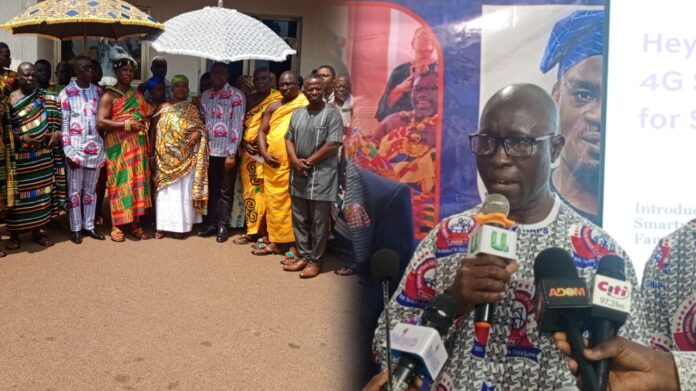

The Ghana National Association of Private Schools (GNAPS) is appealing to government to reduce the Basic Education Certificate Examination (BECE) registration fees charged private schools.
President of GNAPS, Professor Damasus Tuurusong, made the appeal during the launch of the 2026 GNAPS Week Celebration held at Ejisu, in the Ashanti Region on Tuesday, February 10.
This year’s GNAPS week event, celebrated under the theme “Resetting Ghana’s 21st Century Education: Embracing the Creative Role of Private Schools,” brought together key stakeholders in education to reflect on the current state and future of Ghana’s educational system.
The president for GNAPS, Professor Damasus Tuurusong noted that despite improvement in the nation’s economy, including a reduction in inflation, economic stability, and lower petroleum prices, BECE registration fees for private school students continue to rise, with increases exceeding 20 per cent.
He described this year’s increase as “unconscionable”, as they had to pay 24.24% more of last year’s fees.
“This year’s increase of 24.24% in the BECE registration was unconscionable”, he said.
He urged government to reduce the fees to meet the current economic situation, as these escalating fees place a significant financial burden on private schools and their students.
“We plead for a reset of the Basic Education Certificate Examination (BECE) registration charges to reflect the current economic situation”, He added.
Professor Tuurusong reaffirmed the association’s commitment to challenging rising Basic Education Certificate Examination (BECE) registration fees, following an intense but ultimately unsuccessful campaign to reverse this year’s increase.
Despite a concerted effort by GNAPS and its members, the anticipated reduction in fees was not secured. However, GNAPS leadership emphasized that their decision to stand down was a strategic move, not a concession of defeat.
“We did not get the reduction we anticipated. However, we sent a strong signal that we must not be taken for granted. And let me indicate that our decision to back down was not an indication of defeat. We have not surrendered the fight. Surrendering would spell doom for our school children,” he stated.
He further admonished school owners, parents, alumni, staff, students, and partners to join forces in opposing future fee hikes. The association stressed that reversing such financial decisions is a formidable challenge once fees are announced, underscoring the need for broad-based support, spiritual, moral, and financial, to achieve meaningful change.
“We’ll require the spiritual, moral and financial support of parents, staff, students, alumni and all other partners to succeed in preventing further fee-increases”, he concluded.
Professor Tuurusong also called on statutory agencies such as the Environmental Protection Agency (EPA), Metropolitan, Municipal and District Chief Executives (MMDCEs), and the Ghana Revenue Authority (GRA) to adopt moderate methods in dealing with educational institutions.
“The Environmental Protection Agency (EPA), MMDCEs, Ghana Revenue Authority etc. must reset their style and approach to dealing with clients in a critical sector such as education”, He said.
He criticized recent actions by the EPA, particularly in Greater Accra and other regions, where the agency imposed hefty fines on schools operating without permits and, in some cases, shut down schools without allowing them adequate time to comply or settle their obligations.
He described these actions as excessive and urged regulatory agencies to adopt a more supportive approach, especially in the sensitive education sector.
“Over the past few months, EPA in particular, has been rather ruthless in its approach to enforcing its mandate.
In Greater Accra and some other regions, EPA not only slapped hefty fines on schools for operating without permits, they also issued fines they obviously could not pay.
The Agency brutally locked up some schools without affording the institutions sufficient time to settle their bills,” he explained.
ALSO READ: