
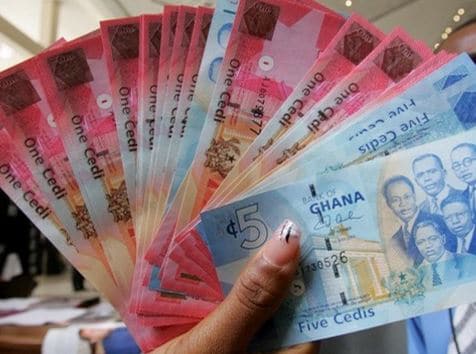

After a historic 30% annual gain against the US dollar in 2025, Ghana’s cedi is expected to experience modest depreciation in 2026, according to EM Advisory.
Analysts attribute last year’s rally to elevated gold prices, strong cocoa earnings, and increased foreign reserves, which allowed the Bank of Ghana to inject roughly $10 billion into the foreign exchange market.
Gold exports were a key driver, reaching $8.3 billion in the first half of 2025 alone—nearly double the previous year.
“Because the Ghana Gold Board is mandated to surrender its foreign exchange earnings to the Bank of Ghana, these inflows went directly to strengthening reserves rather than leaking into parallel markets,” the report noted.
The advisory cautions that 2026 will test the resilience of the currency.
“While gold prices should remain elevated, the Bank of Ghana is likely to allow the currency to resume its traditional gradual weakening trend to preserve Ghana’s external competitiveness,” EM Advisory said. By year-end, the cedi is projected to trade at GHS 12.0/USD, reflecting a modest depreciation from current levels.
Reserve adequacy remains a focus, with total gross international reserves reaching $13.8 billion, equivalent to 5.7 months of import cover.
The report warned, however, that reliance on a concentrated commodity export base—predominantly gold, cocoa, and oil—leaves Ghana vulnerable to global price swings.
The advisory recommends structural reforms to reduce commodity dependence and strengthen resilience. “Establishing a modern gold refinery and implementing traceability mechanisms across the supply chain would help capture more value domestically and reduce exposure to price volatility,” EM Advisory suggested.
The local gold refining initiative with Gold Coast Refinery is highlighted as a promising step toward this goal.
