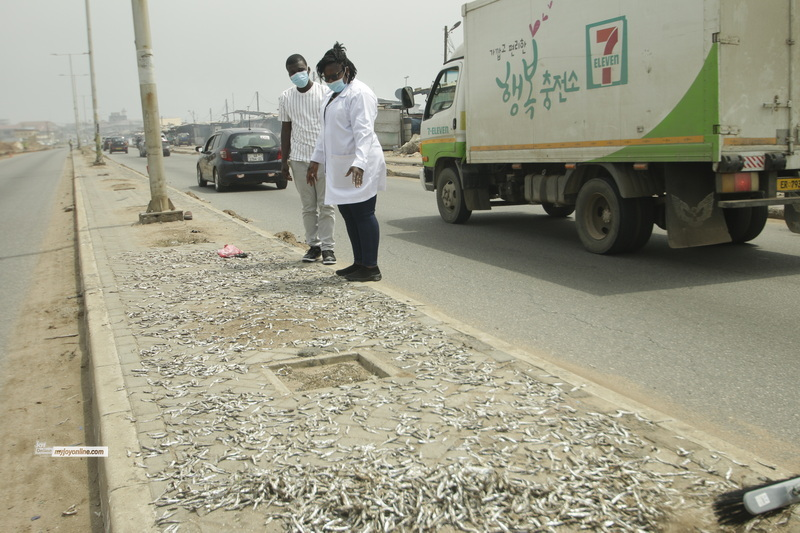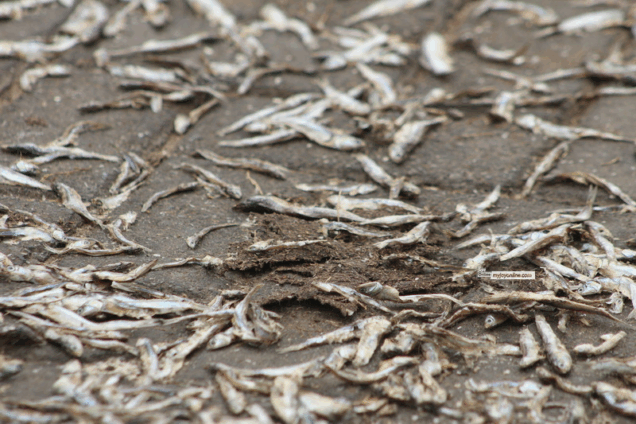

Fish dried on the median of a busy road at Jamestown, allegedly contaminated by human excreta, vehicular emissions, and disease-causing microorganisms, have been seized by the Accra Metropolitan Assembly (AMA) as part of the ongoing Joy Clean Ghana campaign, triggering emotional protests from aggrieved fishmongers whose livelihoods have been disrupted.
The Director of Metro Public Health at the AMA, Ing. Florence Kuukyi, justified the seizure, describing the drying of fish at the centre of a traffic corridor as a grave public-health danger that could expose consumers to life-threatening diseases.

“Where we are standing is the median of the road. Vehicles are passing in and out, and when they pass, they emit fumes,” she said. “Drying food meant for human consumption here poses a very high health risk.”
According to Ing. Kuukyi, the fish were exposed to vehicular emissions, dust, bacteria, parasites, and heavy metals such as lead and cadmium, all of which could have serious health consequences.
“There is contamination from microorganisms like bacteria and parasites. Flies perch on human excreta and come back to sit on the fish. The fish was dried right there, on the bare ground,” she stressed.
She further revealed that the situation was worsened by what appeared to be direct contact with human faeces.
“Somebody either defecated there or stepped in human waste and walked over the fish. How can we collect something already contaminated with human excreta? We can’t even use our hands,” she said.
Ing. Kuukyi warned that consuming such fish could result in upper respiratory diseases, diarrhea, cholera, and typhoid fever, noting that some of the chemicals involved are potentially carcinogenic.
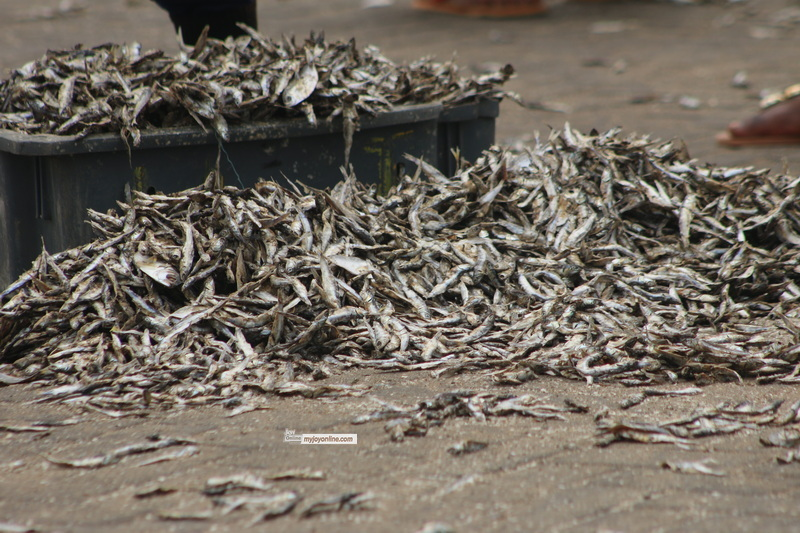
“People even go to the market, remove the dish, and taste it without washing it first. They claim they are not selling it to human beings—then whom are they selling it to? ” she questioned.
She explained that the AMA had engaged the women for over three years, opting initially for education rather than enforcement due to the absence of a metropolitan court.
“I personally spent ¢1,500 to construct a drying rack and even offered to buy them fish myself for an experiment to compare rack-dried fish with those dried on the median. They refused,” she said.
“Every day we talk to them, and they don’t listen. Sometimes, when persuasion fails, force must be applied. Protecting public health is our mandate. We are technocrats, not politicians.”

The seized fish, she said, would be sent to the AMA office, after which the matter would be referred to court.
“We don’t have the liberty to decide what happens to the fish. The court will determine whether it should be disposed of. We have photographic evidence,” she added.
However, the enforcement action has left fishmongers distressed and angry, with many insisting they have been left without alternatives.

One trader said the seizure had pushed her into financial distress.
“This is how we feed our children. I borrowed about 30 bags of fish, each costing 170 cedis, and the AMA officers seized everything,” she lamented.
“If this place is not good, they should find another place for us. They asked us to come to the office, and we did, but no new place was given.”
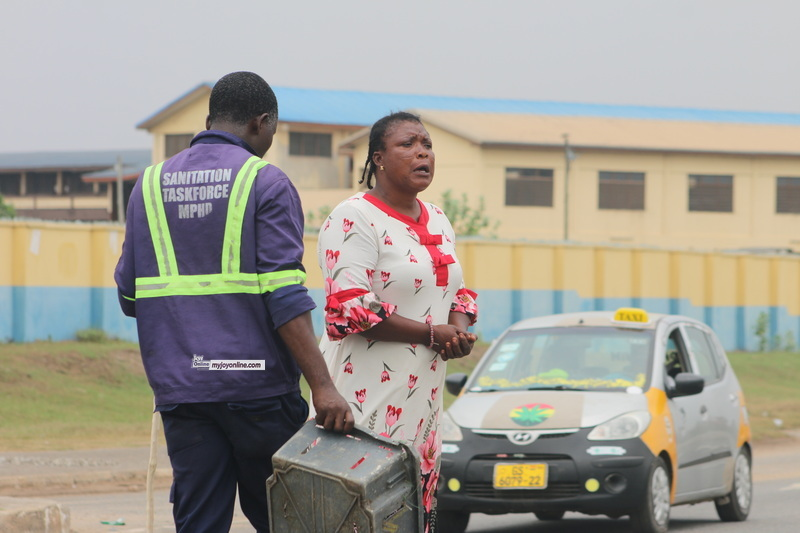
Another fishmonger pleaded for leniency, arguing that the seized fish were already dry.
“These ones are almost done drying. From tomorrow, we will stop, but they should allow us to sell these ones,” she said.
“They are piling all the fish together; how will we even know which ones belong to whom?”
She added that despite repeated complaints by authorities, no designated drying site had been provided.
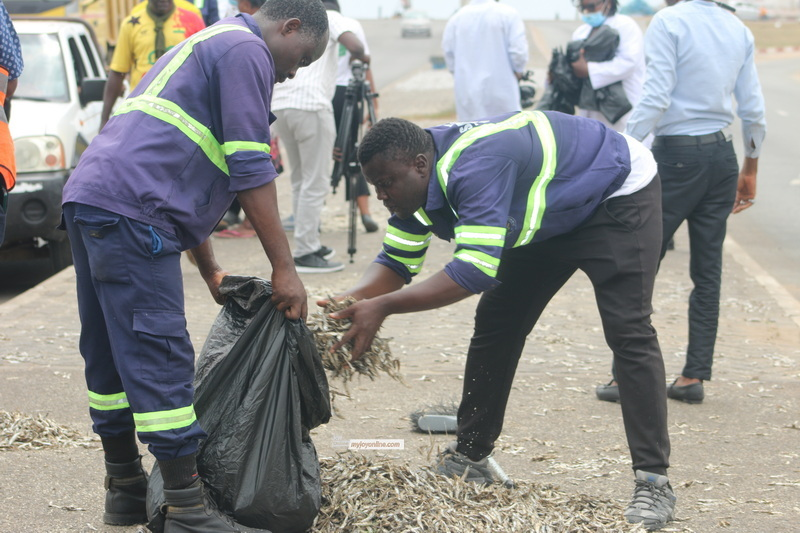
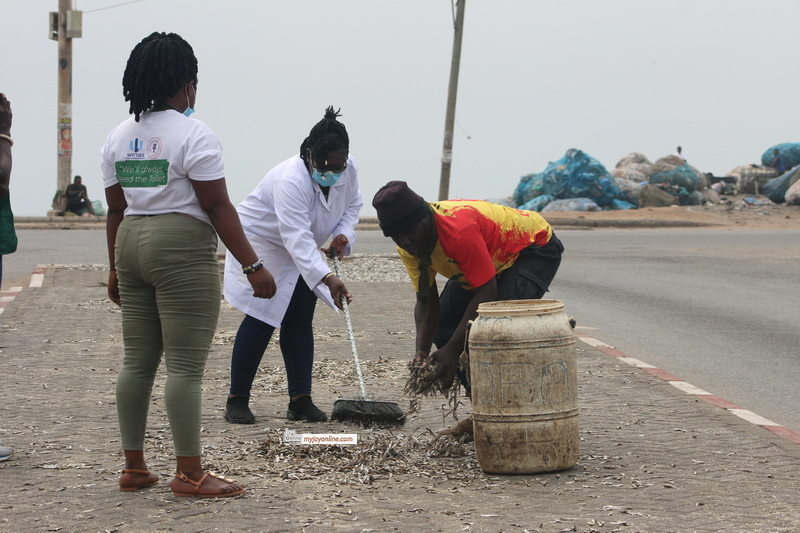
“It has been two to three years, and still no place. I even came early today to sweep the pavement and uproot weeds so I could dry my fish. What work do they want us to do, and what should we eat?” she asked.
The trader also downplayed contamination concerns, claiming the fish are washed before sale.
“It rained yesterday, which is why there is a stench. As for dust and fumes, we wash the fish before frying and selling.”
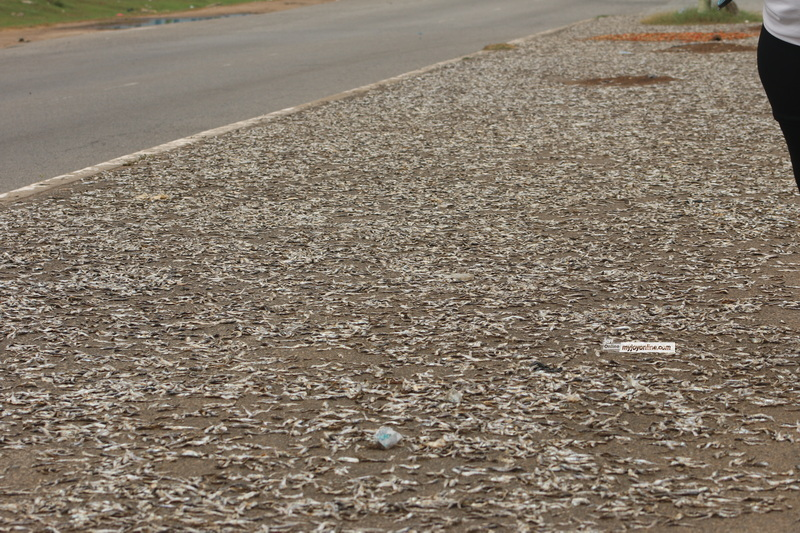
The AMA insists the issue goes beyond livelihood concerns and speaks directly to consumer safety, warning that contaminated food sold today could return tomorrow as a medical emergency.
“Maybe you won’t eat it. Maybe I won’t. But someone’s family member will,” Ing. Kuukyi said. “And when they fall sick, it becomes a burden and a cycle that never ends.”