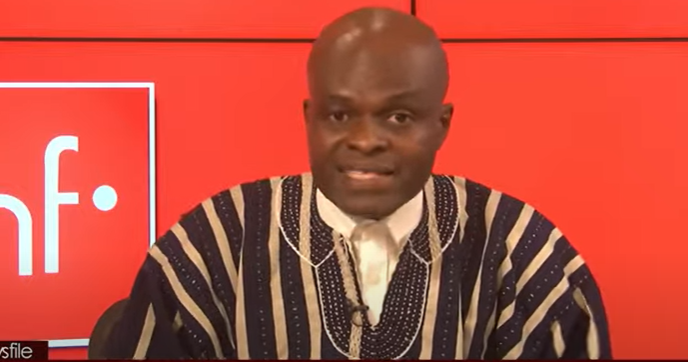

The recent arrest of Mr. Martin Kpebu, a prominent Ghanaian legal practitioner and a staunch advocate for the rights of accused individuals, has sparked intense scrutiny of the nation’s bail system.
Mr. Kpebu, known for criticizing punitive bail practices that undermine personal freedoms, was taken into custody by the Office of the Special Prosecutor (OSP) on December 3, 2025. The arrest stemmed from an alleged altercation with a military officer at the OSP premises, where Mr. Kpebu was present to assist with information regarding corruption investigations involving the Special Prosecutor himself.
Upon his arrest, Mr. Kpebu was subjected to stringent bail conditions that many described as excessive and punitive. The conditions required him to provide proof of property ownership and secure a reputable surety—standards that created obstacles and delayed his release for several hours. These measures contradicted the very bail practices he had long campaigned against, highlighting the inherent flaws in Ghana’s pre-trial system.
Mr. Kpebu’s advocacy for bail reform has a notable history. In 2016, he challenged Section 96(7) of the Criminal and Other Offences (Procedure) Act, which denied bail to individuals accused of serious crimes such as murder and robbery.
He argued that the law violated the principles of presumption of innocence and the right to personal liberty. In a unanimous ruling, the Supreme Court declared the provision unconstitutional, affirming that it excessively restricted judicial discretion and contravened Articles 14(1) and 19(2)(c) of the 1992 Constitution. This landmark decision reinforced the idea that bail is a constitutional right, not a discretionary privilege.
In 2020, Mr. Kpebu again confronted restrictive bail practices under the Anti-Terrorism Act. In Martin Kpebu v. Attorney General (No. 2), he argued that the amendments still allowed blanket denials of bail, contradicting the 2016 Supreme Court ruling. On June 7, 2020, the Supreme Court reaffirmed that courts must retain discretion in all cases, including terrorism-related charges, underscoring that personal liberty cannot be compromised in the name of national security.
Mr. Kpebu also addressed unlawful detention practices in 2019. He challenged the routine extension of detention beyond the mandated 48 hours due to weekends or public holidays, citing violations of Article 14(3) of the Constitution.
On December 18, 2019, the Supreme Court ruled that the 48-hour detention limit is absolute, affirming that no calendar-related excuse justifies prolonged detainment. This ruling reinforced the principle that justice delayed is liberty denied.
These victories go beyond case law—they reaffirm the Constitution as the ultimate protector of individual rights. It guarantees that every accused person is presumed innocent and that personal liberty is a fundamental human right. Courts must weigh each case on its merits, not apply rigid statutes or impose excessive bail conditions.
Imagine being arrested and detained, not because you are guilty, but simply because the law makes it difficult to secure bail. This is the reality Mr. Kpebu has spent years fighting to change, and he has made history doing so. His efforts have reminded Ghanaians that being accused does not equate to guilt, and rights cannot be suspended because of the seriousness of charges.
Of course, there is a counterpoint: in some cases, strict bail conditions are necessary to protect public safety or prevent flight risks. These are valid concerns. The key, however, is balance—public protection should not come at the cost of violating fundamental rights.
Ironically, Mr. Kpebu now faces the very obstacles he has spent years challenging. The stringent bail conditions imposed on him have ignited nationwide debate over fairness, consistency, and transparency in Ghana’s bail system. Many have condemned the conditions as onerous and inconsistent with principles observed in democratic societies. There is no legal framework that should make it practically impossible to secure rightful bail.
The OSP has defended its actions, denying any political motivation or connection to Mr. Kpebu’s criticisms of the office. Yet, his arrest remains a critical flashpoint for discussions about legal reform in Ghana. It raises pressing questions: Are bail conditions being weaponized as tools of control? What does it say about the justice system when even its most ardent reformers are ensnared by the flaws they seek to correct?
As legal professionals and civil society continue to debate these issues, Mr. Kpebu’s case could serve as a catalyst for reforms aimed at improving access to justice across Ghana. It should not be dismissed as routine.
If you believe in fairness, speak up against injustice. Help those facing pre-trial detention understand their rights. Support organizations pushing for legal reform. Demand that lawmakers uphold the Constitution and ensure that courts can function independently. Justice does not defend itself—it requires vigilance, knowledge, and courage.