

Prof. Joshua Alabi, former Vice-Chancellor of the University of Professional Studies, Accra (UPSA), has expressed serious concern over the recent stance of the Ghana Tertiary Education Commission (GTEC), which described doctorate degrees awarded by the Swiss Management Centre (SMC) as “fake.”
Speaking during the ceremony where he received an honorary degree from UPSA in recognition of his transformational leadership, Prof. Alabi noted that GTEC’s sweeping characterization fails to consider the historical and regulatory context under which many Ghanaians pursued their SMC qualifications.
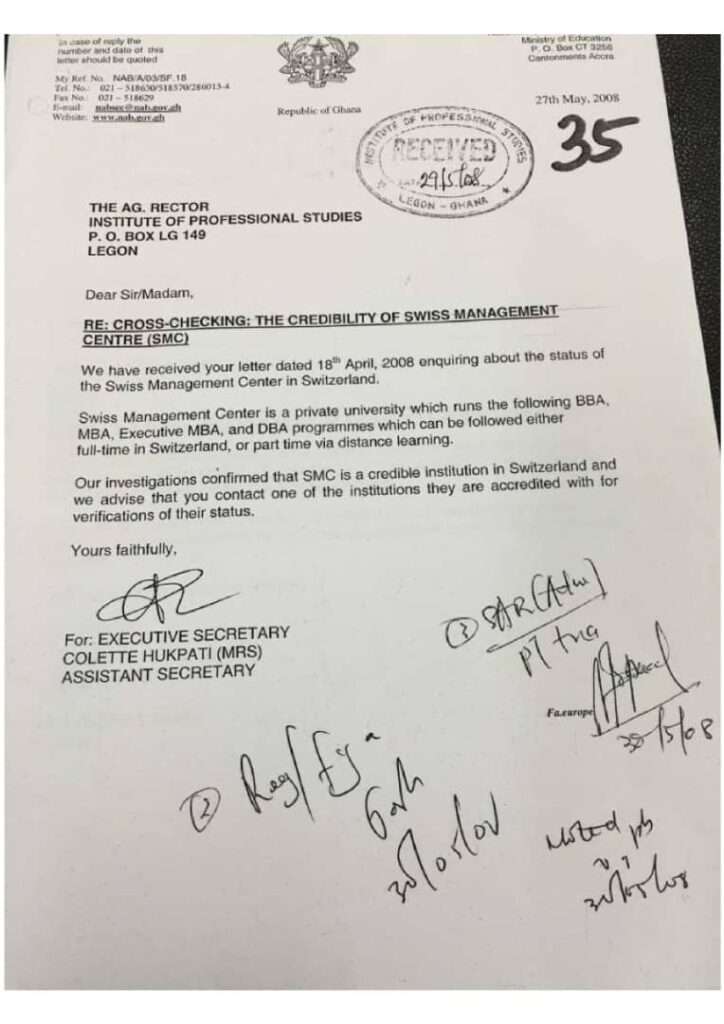
“At the time these professionals—particularly UPSA lecturers—enrolled in SMC doctoral programmes, the former National Accreditation Board (NAB), now GTEC, had issued forms of recognition and registration for the institution in Ghana. Many undertook their studies based on the assurances and information provided by our national regulator,” he said.
Prof. Alabi described it as unfair and damaging to label the qualifications of these hardworking Ghanaians as “fake,” especially when they acted in good faith. He highlighted that some of these graduates are past Vice-Chancellors, university advisors, Deans, Heads of Departments, and lecturers.
He further clarified that UPSA had undertaken a comprehensive due diligence process before allowing its lecturers to enroll in SMC doctoral programmes. This included:
- Verification and confirmation from the former NAB (now GTEC)
- Additional checks through the Swiss Embassy in Ghana
- Direct follow-up and institutional verification in Switzerland
“These steps were meticulously followed to ensure that the institution met the necessary standards before any UPSA lecturer was allowed to enroll,” Prof. Alabi said.
He urged GTEC to exercise greater clarity, fairness, and sensitivity when communicating regulatory decisions, particularly those with far-reaching implications for the careers and reputations of Ghanaian professionals and academics.
READ ALSO: