
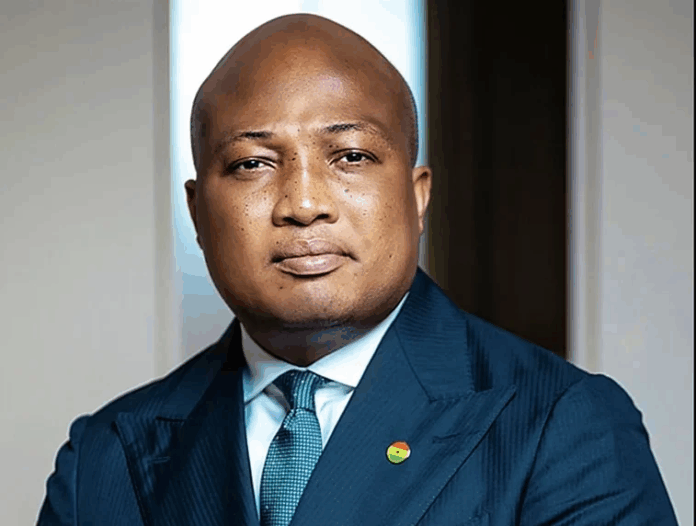

In an emotionally charged meeting at the Ghana High Commission in Pretoria, with Ghana’s Foreign Affairs and Regional Integration Minister, Samuel Okudzeto Ablakwa, distressed Ghanaian nationals gave raw and unfiltered accounts of the fear, legal uncertainty, and economic devastation they have endured amid the wave of xenophobic attacks sweeping the country.
The meeting, captured on video, laid bare the depth of the crisis facing Ghana’s estimated 20,000-strong community in South Africa — a community now fractured between those desperate to leave and those trapped by circumstances they cannot easily walk away from.
One distressed man, identifying himself as a teacher who had been working legally in South Africa, did not mince words.
“We don’t want to stay here. I’m sick and tired of this country,” he said directly to the minister. “I have been working as a teacher in this country. Not that Ghanaians are illegal — but the Home Affairs [department] forces most of them to be illegal.”
He explained that many Ghanaians who once held valid legal status have found themselves in bureaucratic limbo, with permanent residency permits revoked without clear justification, and business permits that were renewed multiple times suddenly declared fraudulent by authorities.
The man also described an incident involving a Ghanaian woman who was knocked down by a car. He said he personally took up her case, hired a lawyer at his own expense, and pursued it to its conclusion — only to be told the claim had been declined.
Another speaker, a woman, raised urgent concern for Ghanaians living outside Pretoria who are too scared to travel to register for the repatriation programme.
“Some of us outside Pretoria can’t even travel by bus or taxi to come and register their names, because they are scared,” she said. “The moment they started the makwerekwere style” — a derogatory term used by some South Africans against foreign nationals — “they have to divert the taxis somewhere. So what about them? What are the safety measures towards them?”
Her words highlighted a critical gap in the evacuation effort: that the most vulnerable Ghanaians, those stranded in townships and smaller towns beyond the capital, may be entirely unreachable.
A business owner at the meeting offered what was perhaps the starkest assessment of the situation, warning that the current wave of anti-immigrant sentiment is not a passing storm.
“What we are seeing or witnessing is not something that is going to end today,” he said. “Most of them have put these guys who are doing these demonstrations on the payroll — a strong one. So it’s not something that’s going to end today.”
Looking ahead to a worst-case scenario, the businessman said he had already begun exploring whether South African counterparts could formally take over Ghanaian-owned businesses through a regulated process.
“I’m looking at a worse scenario as a business owner — discussing with South African counterparts if they can actually have a takeover plan of Ghanaian businesses. At the VTI, they’ve got a takeover regulatory panel where they will be able to give us offers so that they can take over those businesses to local South Africans, so that we can leave peacefully.”
A Government Responding
The Ministry of Foreign Affairs has since announced a support package for evacuees, including a “Welcome Home Financial Package,” transport assistance, a reintegration allowance, and free psychosocial support services.
By May 21, over 800 Ghanaians had registered at the High Commission in Pretoria for evacuation, with the first batch of returnees expected to depart once a verification and screening exercise is completed.
But as the voices from that Pretoria meeting make clear, the numbers alone do not capture the full weight of what is being lost — livelihoods built over decades, legal status stripped away by bureaucratic decisions, and a deep sense of betrayal felt by people who played by the rules and still found themselves unsafe.
For many of them, the question is no longer whether to go home. It is whether Ghana will be ready to truly receive them when they do.
Ghanaians in South Africa who need help and want assistance to return to Ghana pic.twitter.com/Q2LJXvXOFs
— DailyGraphic GraphicOnline (@Graphicgh) May 24, 2026
ALSO READ:
